Optimizing Bet Entries Amid Notification Pushes and Stream Latency in Esports and Live Dealer Combinations
Written by Freya Keller · Oct 23, 2026
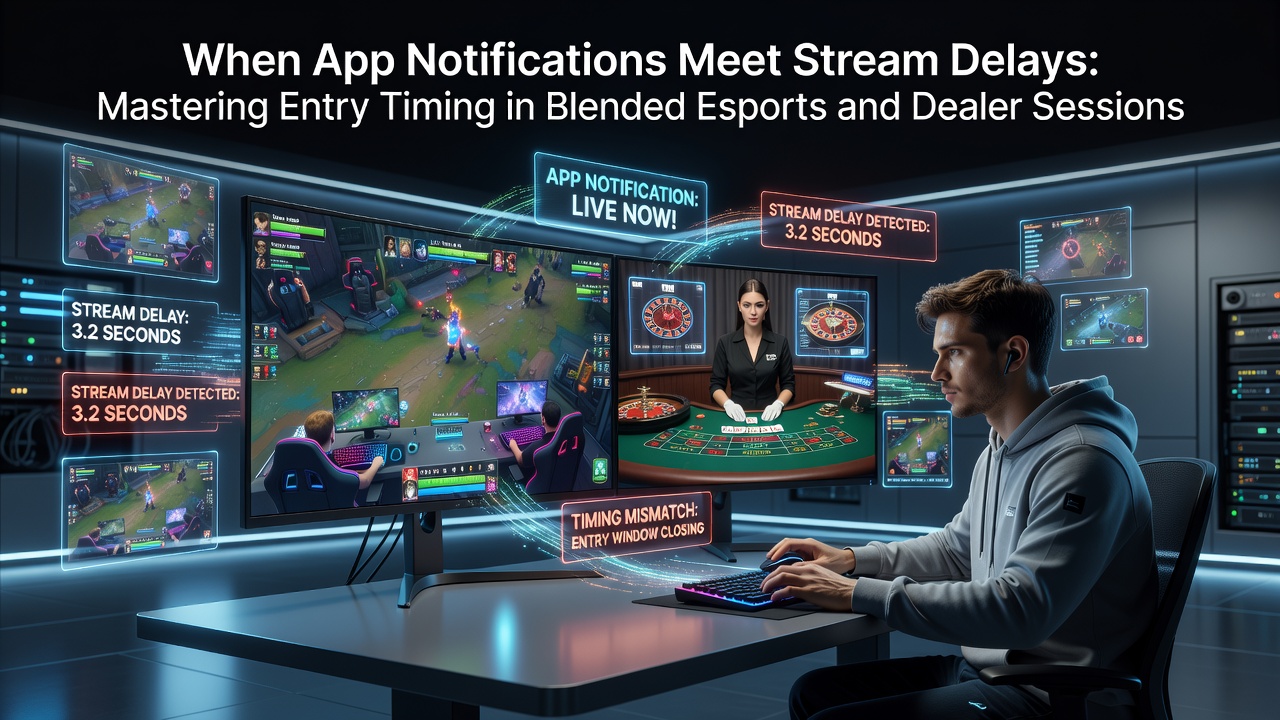
Optimizing Bet Entries Amid Notification Pushes and Stream Latency in Esports and Live Dealer Combinations
Platforms that blend esports tournaments with live dealer sessions face unique synchronization challenges when push notifications from betting apps intersect with inherent broadcast delays, and observers note that precise entry timing depends on accounting for these offsets rather than reacting to surface-level alerts alone. Data from streaming infrastructure analyses shows typical live video latencies range between eight and thirty seconds depending on encoding methods and regional server distribution, while mobile app notifications often arrive within one to four seconds of the triggering event. Those who study hybrid wagering environments find that participants who calibrate their responses to the combined lag achieve more consistent alignment with actual game states in both digital arenas and physical table reveals.
Understanding the Core Timing Variables
Stream delays arise from multiple technical layers including capture hardware buffers, content delivery networks, and device decoding processes, whereas notification systems introduce their own variability based on carrier networks and operating system prioritization. Research published through academic channels indicates that esports overlay events such as objective captures frequently appear on viewer screens several seconds after the internal game clock registers them, and live dealer card reveals encounter similar offsets when feeds route through international distribution points. In October 2026, platform operators began rolling out unified timestamp protocols that embed event metadata directly into notification payloads, allowing third-party timing tools to cross-reference against stream frames without manual adjustment.
Practical Calibration Techniques Across Platforms
Users often measure the offset between their specific app alerts and the corresponding stream footage by logging timestamp differences during controlled test sessions, and this data then informs automated scripts that delay or advance bet placement commands accordingly. One documented case involved analysts at a European research consortium who mapped notification arrival patterns against dealer shoe transitions in baccarat streams, revealing consistent regional variances tied to CDN routing paths. Those patterns allowed participants to predict optimal windows for multi-leg wagers that span both esports hero selections and table outcomes within the same session block.
Because mobile and desktop notification stacks process pushes differently, synchronization requires separate baseline measurements for each device type, and figures from industry reports demonstrate that desktop clients frequently exhibit shorter effective latency than their mobile counterparts due to direct socket connections rather than push gateway intermediaries. Experts tracking these discrepancies recommend periodic re-calibration every few weeks because routing changes and app updates can shift the average offset by up to two seconds.
Integrating Data Sources for Hybrid Sessions
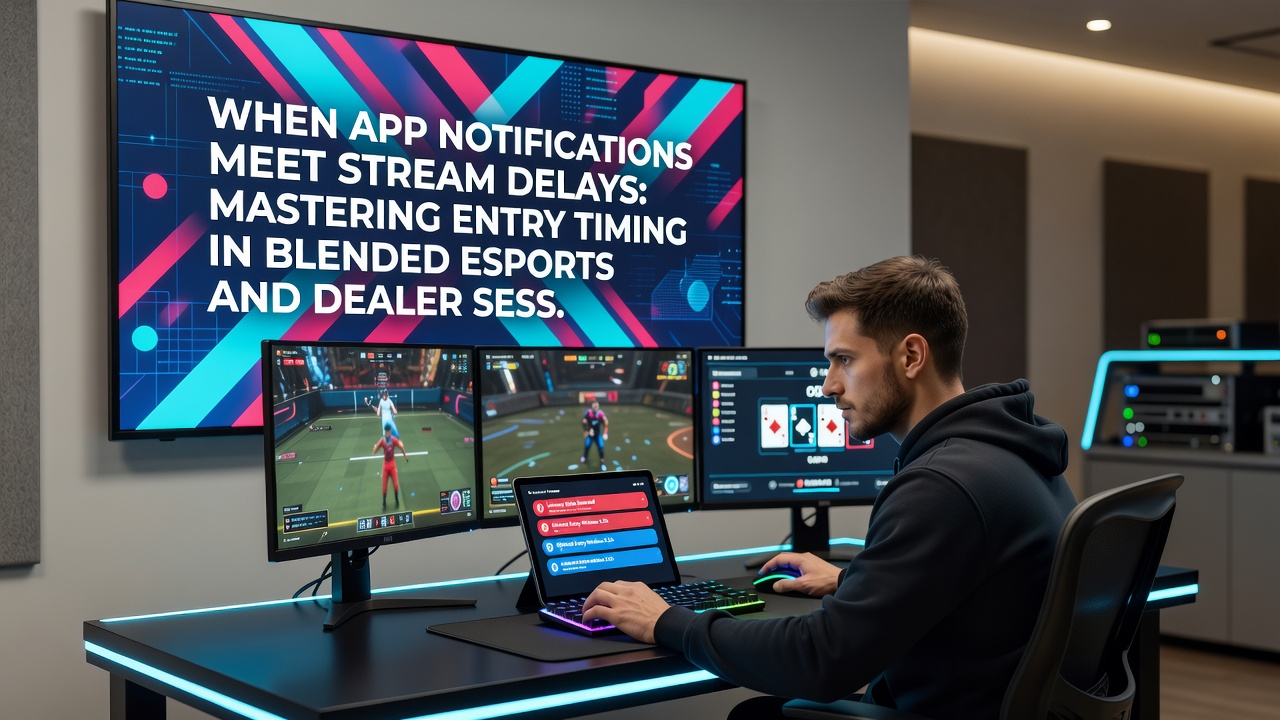
Advanced timing systems pull real-time metadata from both esports game servers and dealer management software, then apply a composite latency model that factors in the user's observed stream delay. According to findings from Stanford University researchers on broadcast synchronization, combining server-side event logs with client-side frame analysis reduces entry mistiming by measurable margins across tested hybrid scenarios. Participants who layer these calculations onto standard betting interfaces report fewer instances of acting on stale information when switching between arena objectives and card reveals.
Regulatory documentation from the Australian Communications and Media Authority highlights the importance of transparent latency disclosure in live streaming services, noting that operators providing delay estimates help users build more accurate personal timing models. In practice, this transparency supports the development of community-maintained databases that aggregate measured offsets for popular esports titles paired with specific dealer platforms, creating reference tables that new participants consult when first entering blended sessions.
Case Examples from Operational Environments
Take one group of analysts who monitored a major tournament series in October 2026 where notification-triggered alerts for dragon spawns arrived an average of fourteen seconds ahead of the visible stream action. By inserting a fixed compensation buffer calibrated to their local connection, they aligned their dealer-session side bets with the same temporal window, resulting in coordinated entries that matched both digital and physical event cycles. Similar approaches appear in reports from Canadian gaming technology conferences, where developers demonstrated prototype dashboards that automatically adjust bet submission timing based on live ping and frame-rate sampling.
These methods rely on consistent measurement rather than assumption, and data indicates that even small unaccounted variances compound when users attempt simultaneous positions across multiple streams. Observers note that successful practitioners maintain running logs of their personal latency profiles, updating them whenever hardware, network conditions, or software versions change.
Conclusion
Effective management of entry timing in environments that merge esports competition with live dealer sessions requires systematic accounting for the distinct delays introduced by app notifications and broadcast streams. Measurement protocols, cross-referenced data sources, and periodic recalibration form the foundation of reliable performance, while emerging timestamp standards continue to narrow the gap between event occurrence and user visibility. Those who apply these objective techniques position themselves to act on current states rather than lagged representations, regardless of the specific platforms or regional routing conditions involved.